What is Cellulose?
Cellulose is a naturally occurring fiber in plants, namely wood, that can be broken down and compressed to make paper and cardboard.
According to Britannica.com, cellulose is a basic structural component of plant cell walls – basically what helps plants stay upright – and is the most abundant of all naturally occurring compounds.
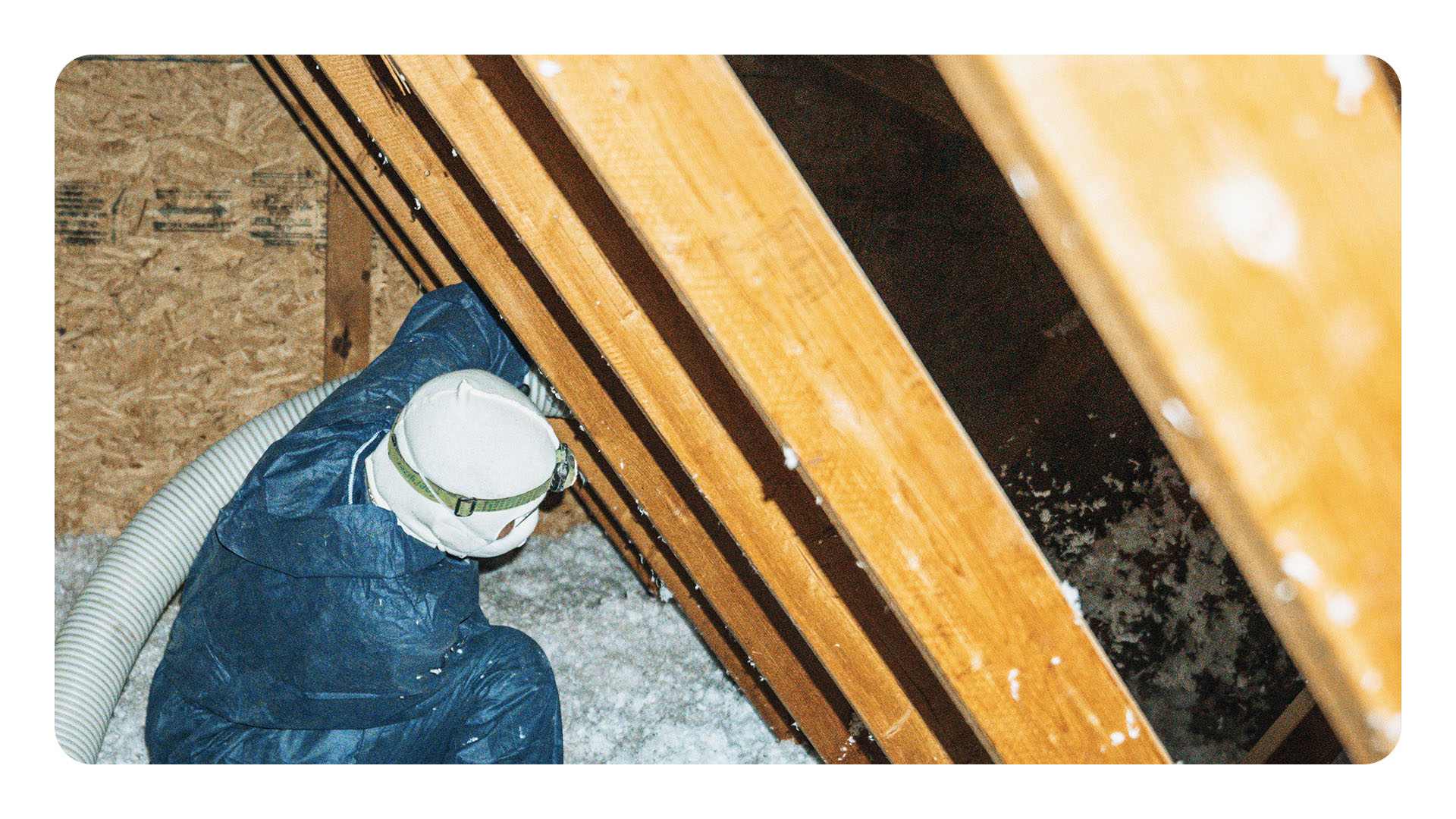
As an insulation product, cellulose is made from recycled paper and cardboard that’s basically shredded and treated with fire retardant. It’s blown into an attic, very similar to fiberglassloose fill.
Versions of cellulose insulation have been around since the early 1900s. When central heating in homes was becoming the norm, homeowners were inspired to insulate their homes to reduce their fuel costs. A product called“Balsam-Wool” was quite popular. This blanket-like material was made of cellulose bits packed between brown paper.
Over time, the marvels of modern-day industrial processing haveallowed cellulose to become a better and safer product.
The use of cellulose gained momentum during the 1970s and continues to be a common choice today for its energy efficiency and its low impact on the environment.
Cellulose and Fiberglass: Twinning!
Cellulose insulation is a step up from fiberglass, but it’s not as expensive as spray foam, making it a great in-between option for our clients.
Cellulose and fiberglass loose fill are very similar products and, for the most part, interchangeable. They’re both blown into the attic, and last for the same amount of time before needing to be topped up: every 15 to 20 years or so.
Cellulose is slightly more expensive than fiberglass loose fill, but not enough to make a noticeable difference in the bottom line.
... Or not
Where the two insulation products differ are in their makeup, but also in their ability to retain heat in your home.
Cellulose has a higher R-value per inch than fiberglass. So, both materials will settle over time, but cellulose retains its R-value when it is compressed whereas the R-value of fiberglass loose fill will diminish when compacted.
Cellulose can create a much more dusty attic environment than fiberglass loose fill, which can be a nuisance, and it takes longer to blow in as the bags are smaller in size, and it doesn't blow as easily.
There’s no particular reason to choose cellulose insulation over fiberglass; it mainly comes down to cost, but also a company having a preference of one versus another. At Beyond, we tend to use fiberglass loose fill as it’s less expensive for our clients. However, we do like to use cellulose in tighter attic spaces when spray foam isn’t in the budget.
When installing fiberglass loose fill you need 22 inches of it to obtain an R-value of 60. With cellulose, you only need 16 to 18 inches to getthe same value. So, in those tight spaces, cellulose makes a big difference for the ventilation of a space.