Common Attic Insulation Issues in Older Homes

Jan 9, 2026
By
Jamie Unruh

There’s something about the sturdy bones of older homes, that make homeowners feel secure, or at least that’s the perception of homes built more than 30 years ago. However, not all home builders are alike, therefore not all houses are alike in quality. Even the best built houses are susceptible to age, wear and tear, and need a little TLC from time to time.

Attics is one area where homeowners might not think about needing to update. Out of sight, out of mind, as they say, but the attic is where there’s potential for big problems, especially in older homes.

"the attic is where there’s potential for big problems"

5 Common Attic Concerns Found in Homes Built in the 1970s and 80s

Let’s look at some common concerns found in attics in homes built between the 1970s and 1980s.

Insulation estimator, Leon DeCoste, explains that one of the biggest problems he sees in older homes is the soffit being blocked with plywood and then retrofitted with perforated soffits but without removing the plywood first.

“Therefore, the homeowner doesn’t know that they’re not getting the proper ventilation in their attic,” he says. “An inspector will crawl right out to the edge, as I do, and we often find out issues there.”

1. Improper Attic Ventilation

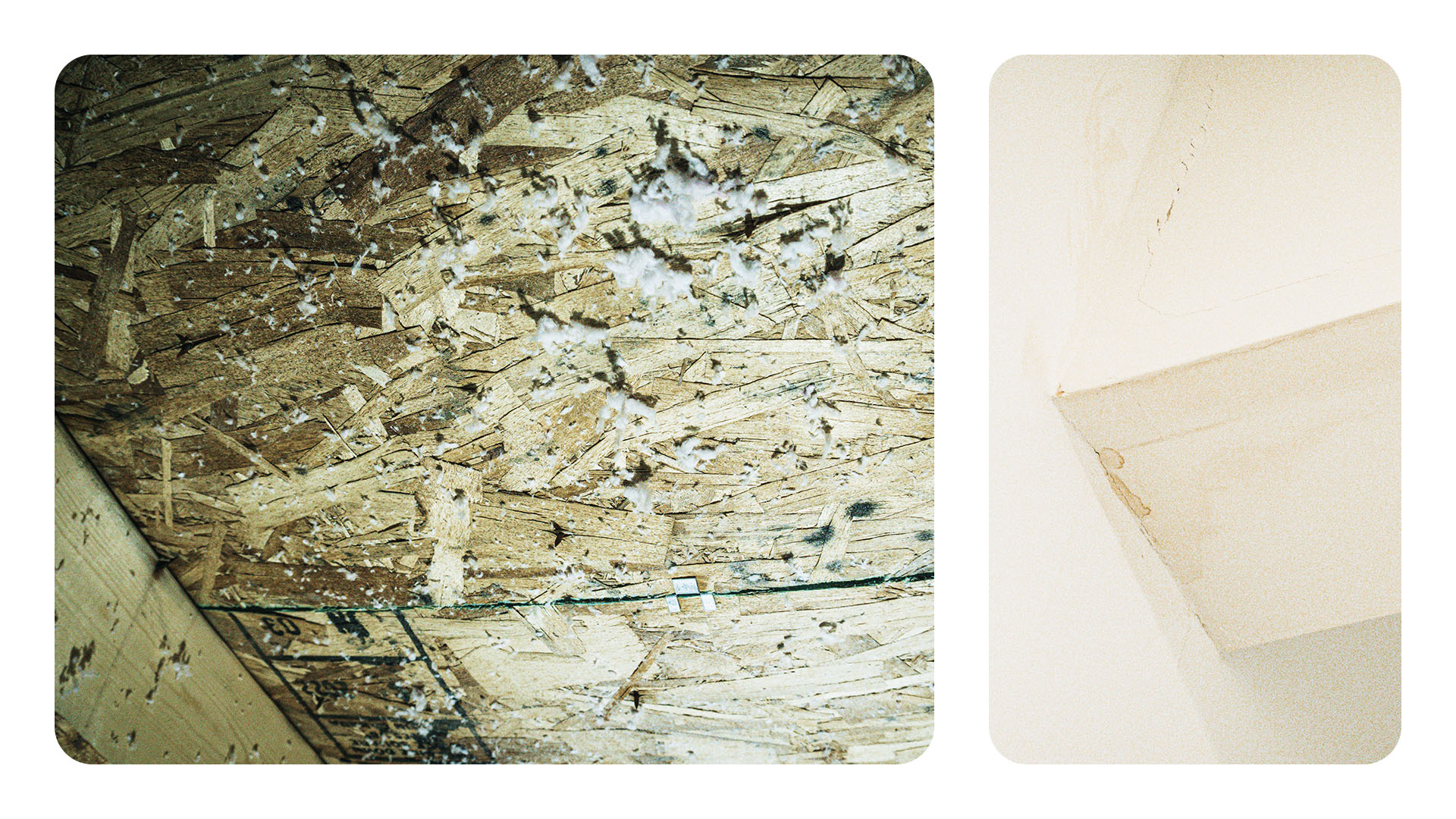
Normally, air comes in through the soffit and exits out the upper vents in the roof, but if the soffit is blocked, the ventilation system isn’t working. The lack of ventilation means there’s high potential for mold as the attic cannot remove the humidity that is accumulating inside of it.

"A lot of people are gathering mold in their homes, and they don’t know it because the airflow isn’t diminishing the frost and when you have frost in a damp dark area, that gives mold a chance to grow,” says Leon.

 2. Insufficient Vapor Barrier

Another issue in older homes is the lack of a vapor barrier. Prior to poly being commonly used, many older homes were built with a wax paper vapor barrier or a paperback insulation. These materials are extremely low quality and let moisture transfer into the attic.

Unfortunately, replacing the vapor barrier can be a huge task.

There’s two ways to improve the barrier. First, which is more invasive to the homeowner, is to drop the ceiling completely and install the poly vapor barrier, then reinstall the drywall and insulation. The second, far less invasive, solution is to install a hybrid system.

The hybrid system is two inches of closed-cell spray foam (which will become their new vapor barrier)and followed by blow-in loose fill fiberglass.

3. Attic Insulation Fire Hazards and Underperforming Insulation Combo

In addition to wax paper and paperback, some older homes used wood chips as an insulator. Not only is this a fire hazard; wood chips also don’t do a whole lotto insulate often only retaining a 1.5 R-value – that's about the same as an uninsulated glass pane!

Some older homes will have an older style of gooseneck vent, which is just retrofitted on top of the roof with no stem coming to the interior of the attic.

4. The Big One: Attic Rain

This set up does not allow 100% of the vapors to evacuate, causing a big issue with moisture in the attic, namely attic rain. Attic rain happens when a poorly insulated attic traps warm, humid air, which turns to frost, and when the weather warms up again, the frost melts and “rains” in your attic. That water can pass through the sheeting, sit on the plastic vapor barrier, and begin dripping through your bathroom fan or into the drywall ceiling creating a brown stain on your ceiling.

The fix for this is installing a proper gooseneck vent which is a four-inch stem made of PVC pipe that cuts directly into the attic space and then joins in with a new insulated flex pipe which will ensure all the air will be evaporated.

Any type of penetration through the ceiling can cause issues in older attics too if the seams are not properly sealed.

“Nine times out of 10 the plumbing isn’t conformed or sealed,” says Leon, adding, “a lot of attic access doors are also improperly insulated.”

5. Poorly Insulated Attic Access

When it comes to light fixtures, plumbing, or any other breach in the attic floor, ensuring the area is not only taped, but also sprayed with can foam around the edges of the appliance will ensure no moisture will leak into the attic.

Attic access points can be quickly insulated with a six-inch foam board cut to fit the area, then sealed so no moisture can seep through. Weatherstripping is also installed or replaced on the attic hatch door to ensure a full seal.

Hidden Problems with Poor Attic Insulation During Fall and Winter

After the fun frolicking of summer comes the cooler, slower days of fall. The days get a little shorter, the dew stays a little longer, and your bathroom fan begins leaking. Wait. What?

Yes, unfortunately, even though daylight hours are shortening, the cold weather really brings attic insulation problems to light.

It’s in the fall and winter when most homeowners start noticing problems with their heat retention, ceiling spots, or dripping from bathroom fans from attic rain as mentioned above.

Attic heat loss is most noticeable in the winter, usually when clients see spots on their shingles defrost quicker than the rest, which is a telltale sign that too much heat is escaping from inside the attic space. This is due to insufficient insulation.

Improper ventilation can lead to mold growth, which can lead to all kinds of structural issues, and health problems for the home’s occupants.

The other big one: Asbestos in the Attic

Vermiculite, or asbestos, is another thing that can be a hidden problem. Asbestos was innocently added too many construction materials as a binding agent until it was discovered to cause cancer. It is no longer allowed to be used in any setting, but asbestos remains in many older homes. When it’s disturbed, asbestos becomes airborne and can settle in the lungs, thus causing disease.

Asbestos is toxic and needs to be removed properly by trained professionals, such as our partners, Wise Abatement, so the harmful fibers do not contaminate your home.

Best Spotted in the Winter: Wind Washing

Wind washing is something that’s often not noticed until the cold weather comes and often too late once it’s set in. Wind washing occurs within the four corners of the home. Where there’s a spine that comes down from the roof at two angles, the air hits that spine and creates a turbine that blows the insulation away from the corners. This essentially removes all the insulation from those areas, and moisture seeps through and stains the interior walls or ceiling of the home. Unfortunately, this circumstance isn’t noticed until the stains appear.

From outside the attic, there’s not much you can do to fix the insulation issues. It’s best to call professionals to do a proper assessment and offer more than one way to rectify the issue at hand.

If you notice your home is overly hot during the summer (where the hot air can’t evacuate from the attic), this could be your sign that there’s a ventilation issue that can be addressed before fall and winter sets in. It could also be lack of insulation that’s allowing heat to radiate down into the home.

"cold weather really brings attic insulation problems to light."

The #1 Solution: Attic Hybrid Insulation System

One of the best ways to solve these attic problems is to install a hybrid insulation system.

This consists of two inches of closed-cell spray foam, followed by 14.3 inches of blow in loose fill fiberglass to achieve a high R-value (a numerical rating that measures how well the heat is kept in or out of a building).

The spray foam provides a great vapor barrier that offers immediate comfort by keeping all the heat inside the home in winter and retaining the cool air in the summer. Not to mention energy savings. Traditionally, homeowners can save between 15 and 22 per cent on their monthly bill.

As outlined above, these are just a few of the common issues Beyond sees in attics of older homes. Some area simple replacement fix; others need professional intervention.

In any case, it’s good to know what’s in your attic and how to address any concerns that may arise. We have decades of experience spotting these things and creating warm spaces and happy people, if any of you find any of these concerns in your attic give us a call us at 403.730.8080 or email us a info@beyondgroup.ca.

back to stories