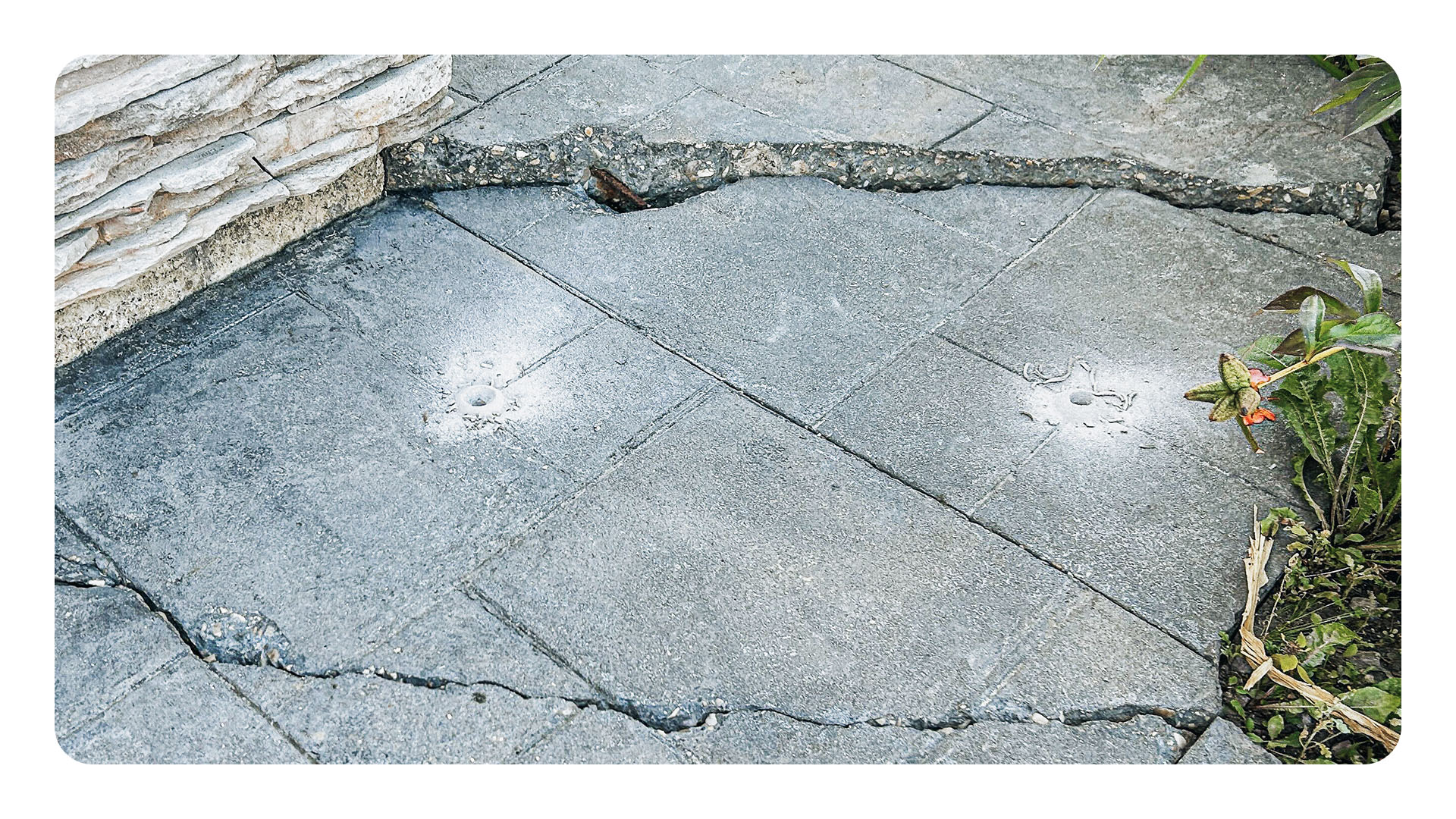
Grinding and Patching
As a do-it-yourselfer (DIY) homeowner, there are some ways to tackle a concrete fix. Three conventional options are to remove and replace a pad (usually done for more severe unevenness), grind the unlevel trip hazard, or patch up the transition (the gap between two slabs).
Unfortunately, both grinding and patching options are temporary. They fix the condition, but not what’s causing it.
If a concrete slab has settled, it will continue to settle until under the slab is repaired properly. If a homeowner decides to grind a part of the slab down to even it out with surrounding slabs, the integrity of it is diminished by making it thinner, and exposing the aggregate material, not to mention it just looks ugly.
Patching a transition to build up a lowered end of a slab of concrete that is continuously settling, will result in the trip hazard coming back as the patch material will continually flake away, and again the finished results never looks as good as in its original state.
Aesthetics are usually important to homeowners, so neither of the above conventional DIY fixes are going to make a walkway or driveway look as good as new.
Polyurethane Foam Jacking vs. Concrete Replacement
When a professional looks at an uneven concrete area, the first thing they ask is: why? What is making it uneven?
Most often the answer is that the ground beneath has shifted, or perhaps the concrete was never poured with the slope it should have had.
Using polyurethane foam to raise and stabilize the area is a relatively quick job; no grinding or patching is needed! It saves the concrete, restoring it back to how it was without having to replace any concrete.
Injecting foam under the affected area to raise and stabilize the concrete pad again, not only makes the area safe again, but it will last a long time.
Of course, having a company come in to replace the affected area with new concrete is an option, however, it is a much more expensive and messy one.
From the labour fees to cost of material, and the time to remove the old concrete, properly prepare the area, install rebar and pour the concrete again, it all adds up. Plus, the new area will stand out against the older concrete that’s been weathered and will have a different colour than the other slabs.