What We Found On Site
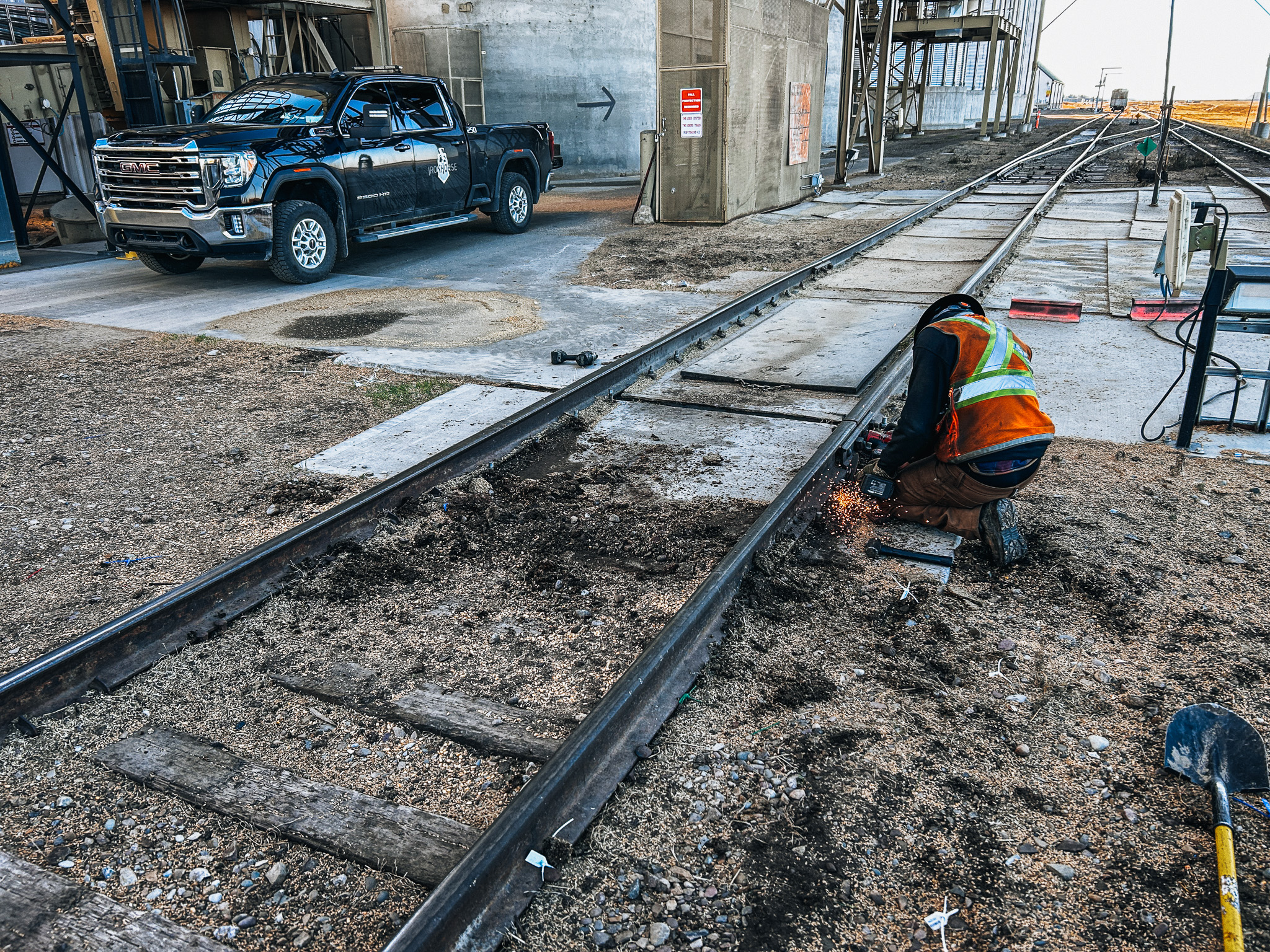
The affected section of track crossed over an underground concrete tunnel used to house electrical and communication lines. To support that crossing, the system was engineered with four heavy concrete pads, each roughly:
Over time, those pads had:
- Settled 1–2 inches
- Shifted 8–10 inches laterally away from the tunnel
- Pulled the rails out of alignment because the rails were bolted directly to the concrete
Nothing was wrong with the tunnel itself.
The problem was the soil around it.
Likely causes included:
- Inadequate compaction during original backfill
- Continuous vibration from rail traffic
- Freeze–thaw cycles
- Soil migration away from the rigid tunnel structure
The rails were simply reacting to what the foundation was doing.
The Expensive Path (And Why It Wasn’t Ideal)
The traditional fix would have looked something like this:
- Remove rails
- Demolish concrete pads
- Excavate and recompact soil
- Re-pour concrete
- Rebuild and realign track
That’s not just expensive, it’s time-con-sum-ing, season-dependent, and disruptive to operations. Late in the year, that kind of rebuild becomes even riskier.
The client needed a solution that addressed the problem without tearing the system apart.
Our Approach: Solve the Root Cause, Not the Symptom
Once the rails were detached from the concrete pads, the picture became clear. The track itself wasn’t failing, it was being forced out of alignment by moving supports.
Our solution focused on the system as a whole.
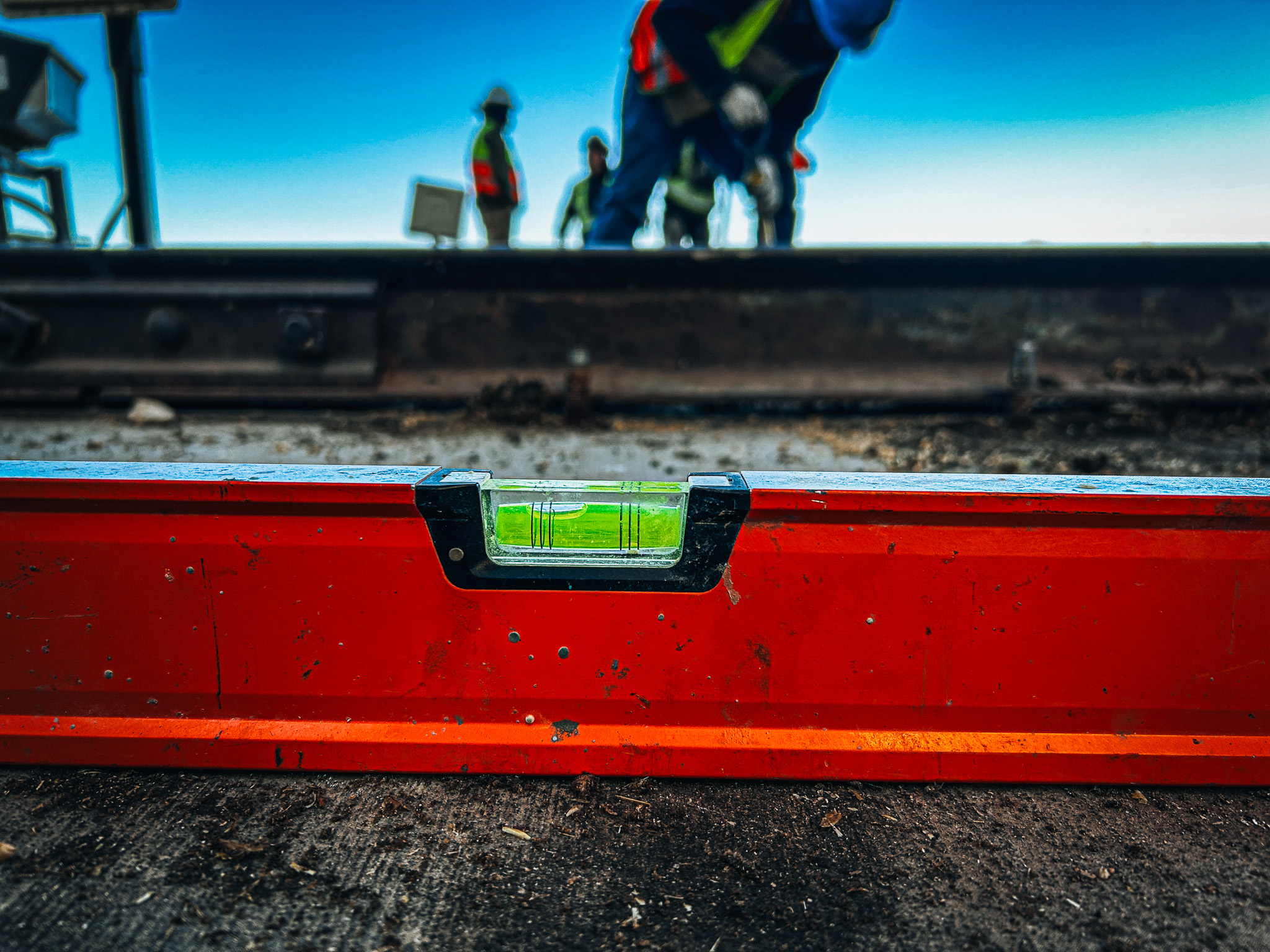
1. Re-leveling the Concrete Pads
Each pad was brought back into proper position.
- Two pads required mechanical assistance using airbags due to their weight and thickness
- All pads were precision-lifted and finalized using foam injection
This allowed us to restore elevation and orientation without removing the pads.
2. Deep Soil Stabilization
Lifting concrete without addressing soil is short-term thinking.
To support long-term performance, we stabilized the soil at two depths:
- 5 feet below grade for deep structural reinforcement
- 3 feet below grade for upper-zone stabilization
This created a reinforced soil mass beneath and ahead of the pads, reducing the risk of future settlement or lateral movement.
3. Controlled Reassembly
Once the pads were level and the soil stabilized:
- New rails were installed
- Rails were bolted back onto corrected supports
- Track alignment returned within acceptable tolerance