

When it comes to antiques, patina or the ageing effect on a surface of say an old car or lamp, gives value to that item. But when it comes to working assets like a concrete pipe, a metal storage tank or handrail, patina is not helping with the value or longevity. Covering your asset with a protective coating will not only make your equipment look good, but it will also prolong its life.
Signs You Need a Protective Coating Before It's Too Late
By
Jamie Unruh
Published on
January 13, 2026
Updated on
January 13, 2026

What is Protective Coating?
A protective coating is a product that is applied toa surface to protect against corrosion. It can be anything from a thermoplastic to an epoxy latex paint - any sort of coating that goes over top of a surface to protect against corrosion.
It can serve as a visual aid to make things look nicer, but it is designed to increase the life of an asset against things like corrosion and rust.
Anything that is subject to failure without a protective film applied to it will eventually corrode or erode and will eventually fail. Luckily, there's no limitations to what can be coated. Metal, concrete, plastic, glass, wood, drywall; the sky is the limit when it comes to coating.
Coatings are more commonly used in industrial and commercial settings, and even in the oil field.
Indicators That Your Coating May Be Reaching the End of Its Life Cycle
Most people start to think about coating once they see rust, but that’s actually a sign that the coating has already failed.
Signs to look for before rust appears are chalking or a dusty looking film, fading, discoloration, cracking, and paint chipping. These are indicators that the coating is breaking down, and it’s time to look at recoating.
The Signs Are There, Now What?
If the coating breakdown is minor, then sometimes a simple sand down and recoating will fix it right up.
If the coating system is failing quite badly, then removing the coating right down to the original material (metal, wood, etc.) is necessary. This is done via sandblasting, sanding by hand, or a bristle blasting. Once the old coating is off, a new coating system can be applied.
Again, depending on the material the coating is being applied to will depend on what type of coating you’ll need - and there is a lot! Best to let a professional inform you of what you’ll need for your particular project.
Usually, a primer and topcoat are all that’s needed. Sometimes, a primer, mid-coat, and a topcoat are applied. It really comes down to the environment the item is in, what it might be exposed to, and what the purpose of the coating is such as mitigating corrosion, protecting against abrasion or sealing and preserving the item.
Secondary Containment
A secondary containment is like a backup layer, keeping things where they're supposed to be as opposed to where they're not supposed to be.
When dealing with storage containers such as a tank being the primary containment, having a coating for secondary containment is very important, especially when it comes to the oil and gas sector.
A stored hydrocarbon product such as oil, crude, or refined fuel must have a means of a secondary containment to reduce any potential leaks.
If the tank that transports this fluid fails, the secondary containment will prevent any of these substances from getting into the ground and leaking into the groundwater.
Concrete Coating
Concrete is everywhere in our world, and while it isa strong, long-lasting material, it can eventually be worn out. Protecting and extending the life of concrete is another way that coatings excel.
Parkades, foundations, storage tanks, warehouse floors and more; most buildings that Beyond is working in typically have a concrete element to it.
In Alberta, concrete is exposed to a multitude of different factors: heat and cold stress, salts for deicing and other products that can degrade concrete.
In infrastructure like underground sewer systems that were built 50-60 years ago when no coatings were used, the byproducts (yes, I’m talking about bathroom grossness) will deteriorate concrete over time. For example, if a sewer wall thickness was originally designed to be 8 inches thick, after 60 years that wall thickness can erode down to 6 or as low as 4 inches, which dramatically increases the risk of the wall collapsing.
Thankfully, we now have the technology to go in and add new concrete to the existing structure and then add a protective coating of epoxy or polyurea over top that will extend the life cycle of that asset without any major traffic disruptions. The alternative being having to rip up the whole roadway, pull it all out and put in a new system.
"The alternative being having to rip up the whole roadway"
Life Cycle of Coatings
There are many factors that affect the longevity of coatings. UV exposure, environmental stress, and chemical exposure can all lead to premature failure of the coating system.
Coatings are susceptible to outside factors such as environment and neglect, but with regular inspections and maintenance, most coatings can last an incredibly long time.
Beyond recently had a client with a large shipping warehouse with a poured concrete floor. After years of vehicle traffic, the concrete started to erode. Putting a protective coating on top will prolong the life of the floor and limit the wear on the concrete. It won’t last forever, but with regular maintenance (recoating every 10 or so years) concrete can endure well beyond its original design specifications (without coating or maintenance) that range between 20-50 years.
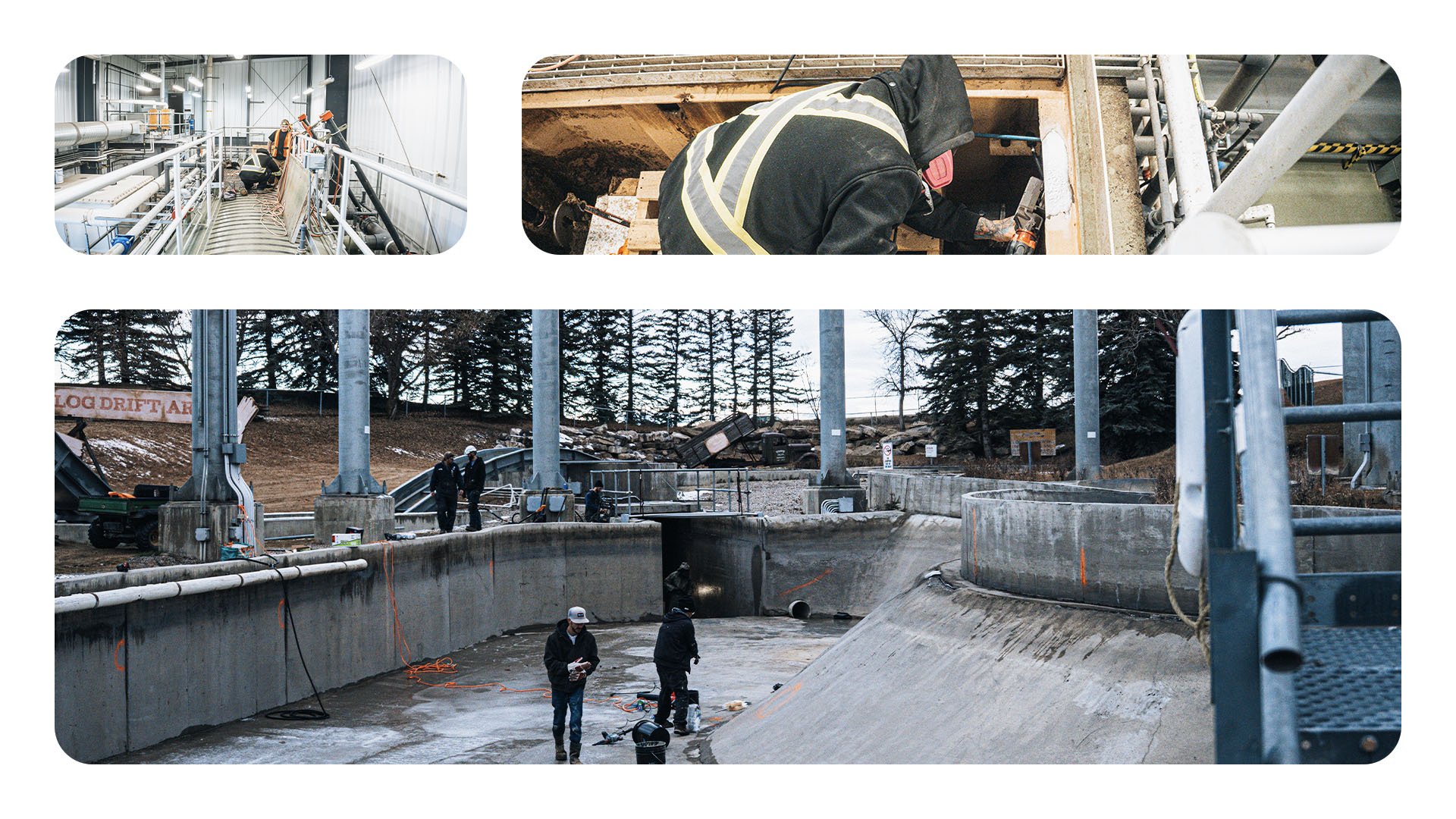
Another example is a project Beyond took on at an amusement park. One of the rides has a lagoon system which is basically a large swimming pool without a protective coating on it. The concrete was starting to crack, and the lagoon was losing a lot of water. It was found that chlorinated water was eroding the concrete.
Beyond could coat the pool sealing the deficiencies and allowing it to stand up to the chlorine thus extending the life of the lagoon for squeals of delight for years to come.
These are just a few examples of projects where a protective coating proved to be essential. Whether dealing with industrial storage in the oil and gas sector, or a concrete pipe (think water main), there are infinite examples of where coatings can be beneficial. Keeping an eye on your coated item to look for premature signs of aging is the best way to protect it before it begins to rust. Get in touch with us today to learn more about how coatings can help prolong the life of your equipment.
←
back to stories