Raw Chemical Market Price Fluctuations
The number one cost for the majority of spray foam projects is tied to the price of the raw chemicals used to make the foam.
Historically, the cost of isocyanate and polyol resin has remained stable, but during the COVID years where many logistical disruptions occurred, the prices of these two chemicals did see a significant spike. At the highest point the cost rose by 60 per cent and while that number took a downward trend, the price today is still between 30 and 40 per cent more than it was pre-COVID.
A big part of why the price rose so high is because the blowing agent in the Canadian foam is solely sourced from one company in the world.
The blowing agent used in two-pound foam products was recently switched from hydrofluorocarbons (HFC) to a more environmentally friendly hydrofluoroolefin(HFO), which produces less greenhouse gases, and only one company makes the HFO to Canadian standards. So, if that company has any production or shipping delays, the cost goes up and filters down to the client.
There have been a few recent small increases (around 3 percent) in the price of raw chemicals, but fortunately, markets are not predicting more chemical price fluctuations in the immediate future.
Amount of Foam Product Needed Versus Labor Required
Another factor that impacts the price of spray foam is the amount used in a project. Obviously the larger the area being sprayed will require more foam which is usually priced out by square footage, but it’s the labor involved that will affect the overall cost of a project.
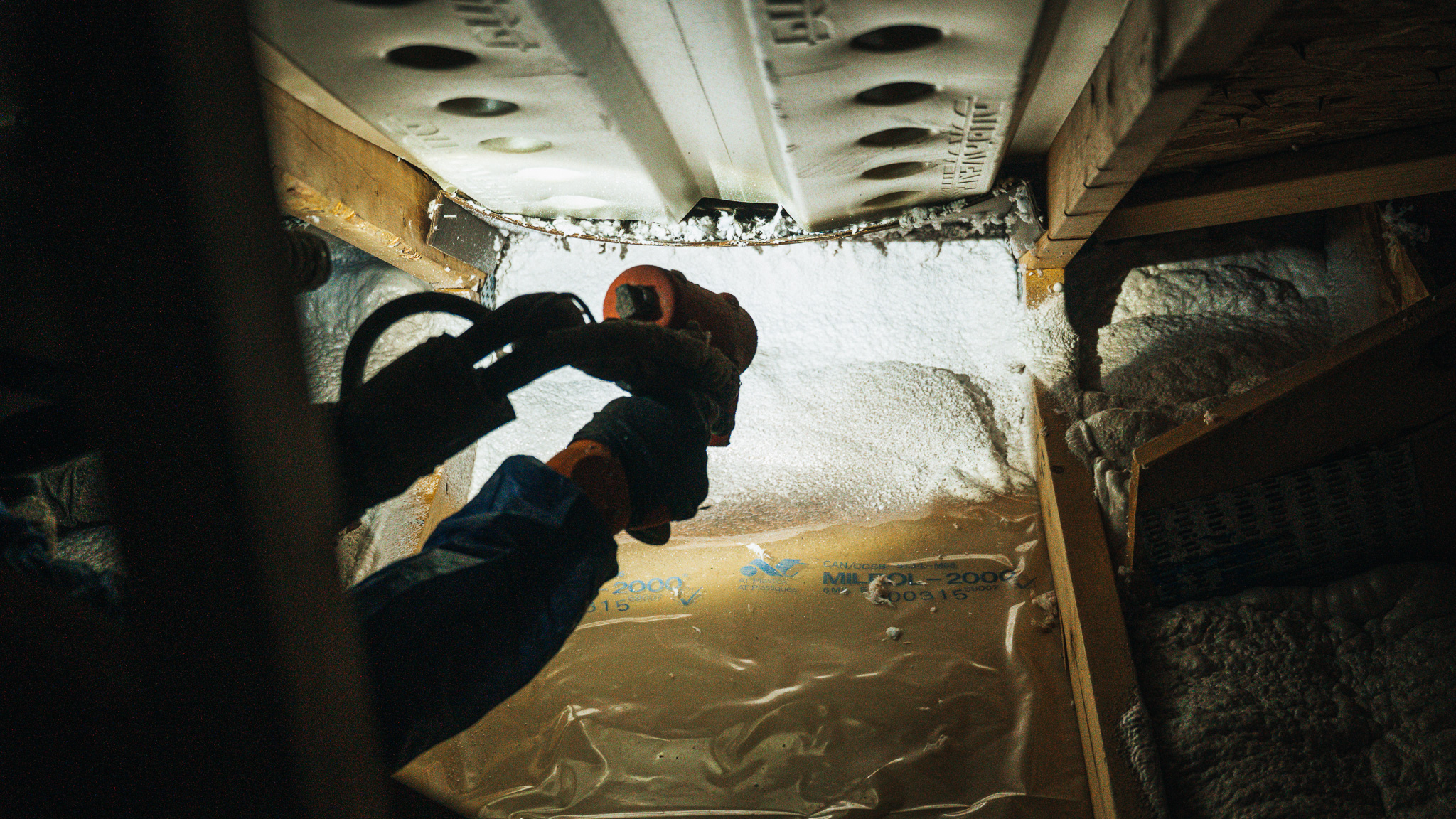
As strange as it may sound, the less labor required means the lower the cost of the project. Why? Well, crews can spray a lot of foam in wide open area without much prep and finish up within hours. Whereas a more confined area would need more preparation time in labor than the time it takes to spray.
The labor involved in larger projects is not usually heavy, so the cost of spraying foam in say, a Quonset versus an attic of a lived in home will generally be less expensive. In the Quonset example, 80 per cent of the cost is in foam material. A home renovation might be 40-50 per cent, but in that situation more labor is required.
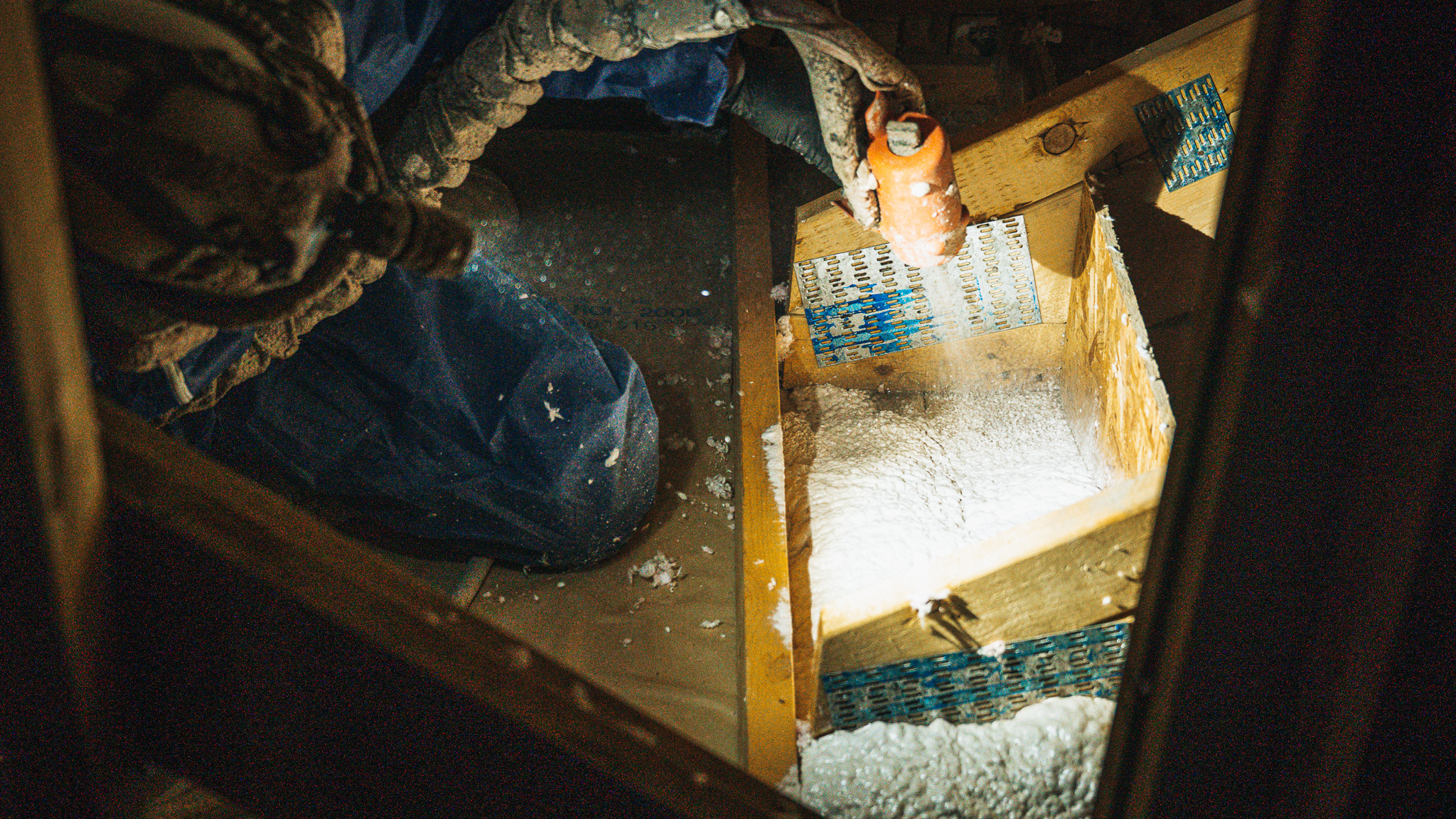
A lot of smaller renovation projects will cost more because of the necessary labor needed to prepare the area before spraying begins. For example, a home renovation will require more labor to coverup or block off areas of a home to protect it from construction dust and debris. It also takes time to carefully move between finished and unfinished spaces to say, pull a hose through to the work area.
It might also take a little longer to do the spraying because working in a limited area requires more care and attention than an open area, and we want to make sure the job is done right.